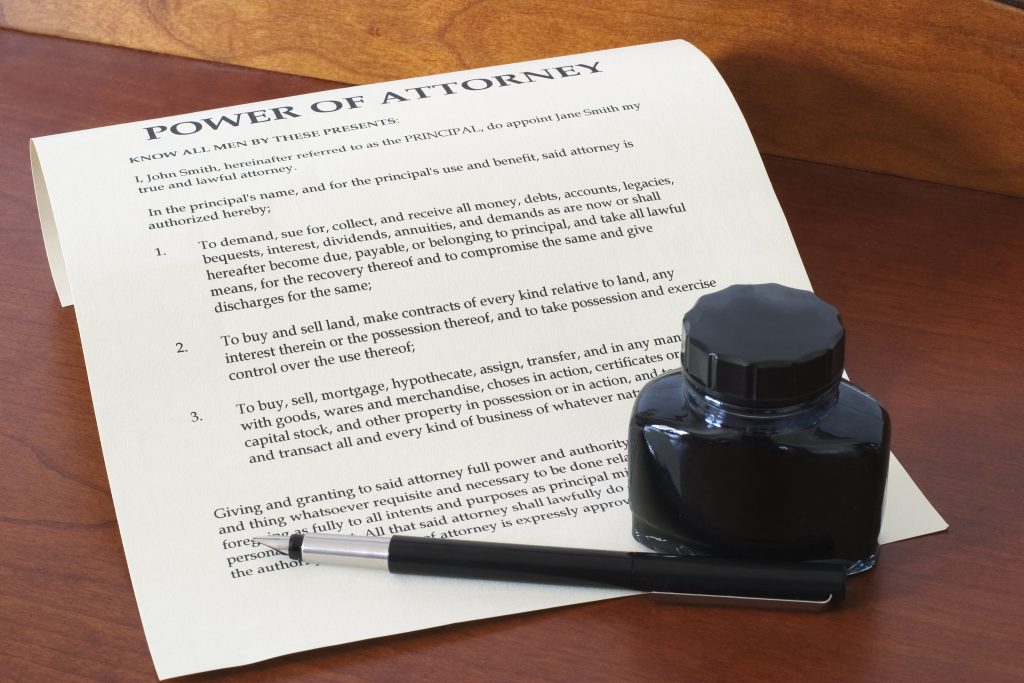
There is a very good chance that you will be asked to a sign a Power of Attorney at some point, if you have not yet done so. Although many people are familiar with the general idea behind a Power of Attorney, these documents are among the most misunderstood and misused tools in estate planning. Because of that, it is essential to understand what you are signing before you put pen to paper. To help provide clarity, the Los Angeles attorneys at Schomer Law Group, APC explain some of the key points you need to know about A California Power of Attorney.
The Basics of a Power of Attorney
A Power of Attorney, commonly referred to as a POA, is a legal document that lets you, the “Principal,” authorize another person, called your “Agent,” to make decisions and take actions on your behalf. The scope of the powers you give to your Agent depends entirely on the type of POA you choose. Failing to fully grasp the extent of this authority can lead to unintended consequences and even open the door to abuse.
General vs. Limited Powers
A POA can grant broad authority to your designated Agent or be restricted to narrow tasks. A general POA gives your Agent sweeping powers to act in your place. With a general POA, your Agent may be able to withdraw money from your bank accounts, buy or sell assets, and even enter into binding contracts using your name. Although the law places certain restrictions on these powers, granting someone this level of authority should only be done when you are confident in their reliability and honesty.
In contrast, a limited POA gives your Agent authority only for specific actions or transactions. For instance, you could grant someone the power to complete the sale of your home while you are overseas or to sign documents related to a single business deal. Limited POAs are also common among parents who wish to give a caregiver the ability to authorize emergency medical care for their child during a temporary absence.
Durable Power of Attorney
Another important distinction you should understand is the difference between a traditional POA and a Durable Power of Attorney. Under the old legal framework, a POA ended if the Principal became incapacitated or passed away. That meant the very situation that most people were planning for, that being the possibility of becoming unable to manage their own affairs, triggered the termination of the POA, making it useless. To address this issue, the concept of durability was introduced. A Durable Power of Attorney continues to be effective even if the Principal loses capacity. Durability makes the POA a powerful safeguard, ensuring that the Agent can step in and manage finances, pay bills, or handle legal matters during a period of incapacity. Without a Durable POA, families may need to go through an expensive and time-consuming guardianship or conservatorship process in court.
Springing Power of Attorney
A Springing Power of Attorney is another variation that can be either general or limited. The distinguishing feature is that the Agent’s authority only takes effect when a particular condition is met. For example, you might include language that causes the POA to activate only if you are officially declared incapacitated by a physician or if you have been missing for a set period of time. While a Springing POA can give you peace of mind by ensuring that your Agent cannot act until a triggering event occurs, it can also create practical challenges. Determining whether the condition has been met may cause delays and confusion, which is why it is important to work closely with an attorney when drafting this type of document.
Power of Attorney for Health Care
Even the broadest general POA does not usually allow your Agent to make medical decisions on your behalf. If you want to grant someone that authority, you need a separate document known as a Power of Attorney for Health Care. This specialized legal instrument, sometimes called a Health Care Proxy or Advance Health Care Directive in California, allows you to appoint someone to make medical choices if you are unable to speak for yourself. This type of POA can cover a wide range of decisions, including approving or declining treatments, selecting medical providers, and making end-of-life care choices. Appointing a trusted individual to act in this capacity is one of the most important steps in comprehensive estate planning because it ensures that your wishes are honored even if you cannot communicate them.
Before signing a Power of Attorney, consult with an experienced California estate planning attorney to ensure that the document reflects your goals, protects your interests, and complies with state law.
Do You Have Questions About Creating an Advance Directive for Your College Student?
For more information, please join us for an upcoming FREE seminar. If you have additional questions or concerns about creating or executing a California Power of Attorney, contact the experienced Los Angeles estate planning attorneys at Schomer Law Group APC by calling (310) 337-7696 to schedule an appointment.

- Reasons to Incorporate a Living Trust into My California Estate Plan - August 16, 2026
- What You Need to Know about Funding a Trust in California - August 15, 2026
- Estate Planning for Real Estate Owners in California - August 14, 2026